
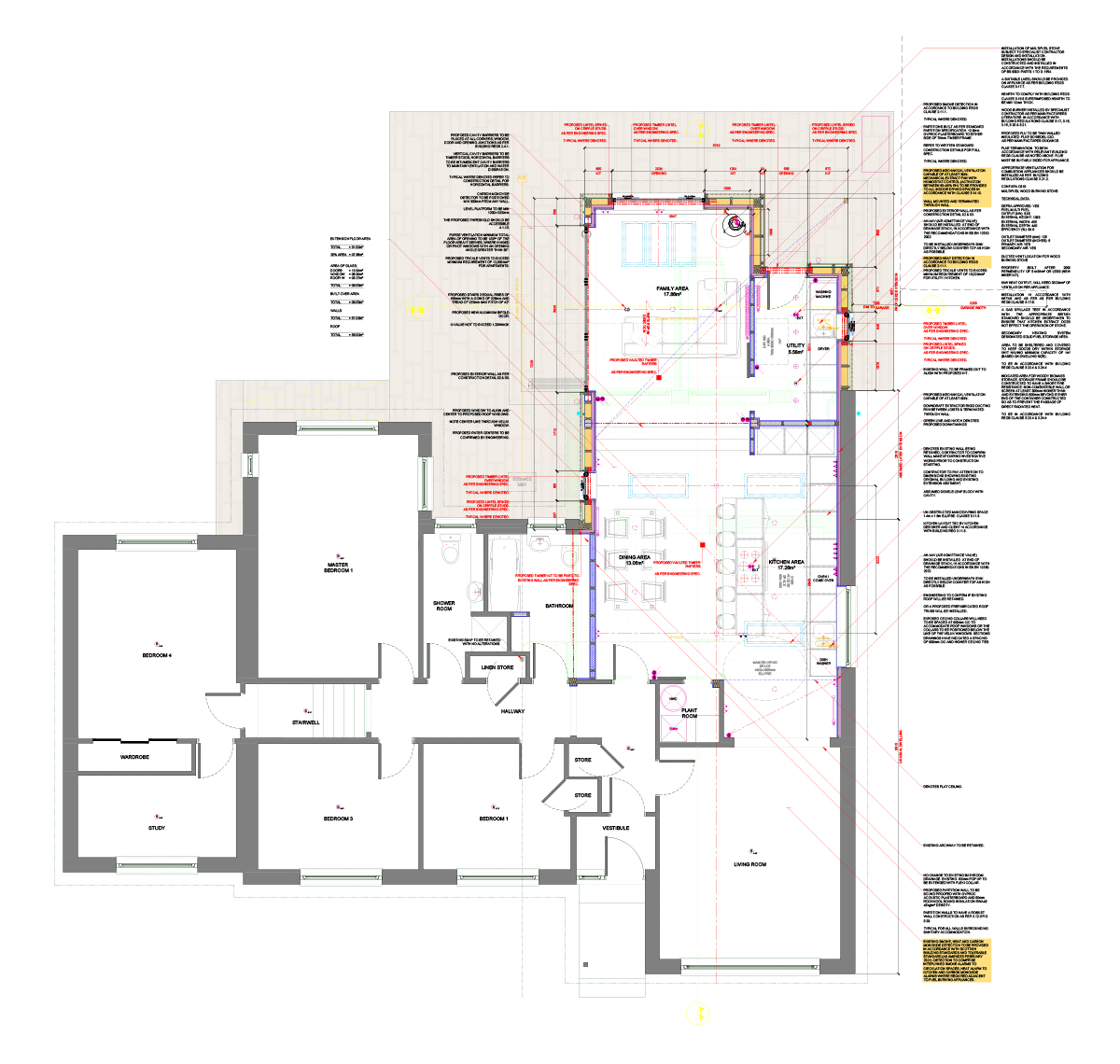
If you’re planning building work in Scotland — an extension, a loft conversion, a garage conversion, or a new build — one of the first questions you’ll face is whether you need a Building Warrant. The short answer: for most significant building work, yes. But the detail matters, because getting this wrong can cause serious problems further down the line.
This article explains what a Building Warrant is, when you need one, when you don’t, and what happens if work has already been carried out without one.
What is a Building Warrant?
A Building Warrant is formal written approval from your local council confirming that your proposed building work complies with Scottish Building Standards. It is issued under the Building (Scotland) Act 2003 and applies across Scotland, including Aberdeen City and Aberdeenshire.
Scottish Building Standards cover:
- Structural safety
- Fire safety and means of escape
- Energy efficiency
- Ventilation and moisture control
- Drainage and sanitation
- Accessibility
It is important to note that Building Warrants in Scotland are separate from planning permission. You may need both, one, or neither, depending on the nature of the work. They are different processes with different requirements.
When Do You Need a Building Warrant in Scotland?
As a rule, you need a Building Warrant whenever you intend to carry out building work that affects the structure, fabric, or services of a building. Common examples include:
- Extensions — single-storey or two-storey additions to a house
- Loft conversions — converting roof space into habitable accommodation
- Garage or outbuilding conversions — changing the use to a habitable room or ancillary use
- Structural alterations — removing or altering load-bearing walls, chimney breasts, or beams
- New build dwellings — houses, flats, or outbuildings above a certain size
- Changes of use — for example, converting a commercial premises to residential
- Installation of a new drainage system or septic tank
- Formation of a new opening in an external or structural wall
This is not an exhaustive list. If you are unsure, the safest course is to check before work begins — not after.
When Do You NOT Need a Building Warrant?
Schedule 3 of the Building (Scotland) Act 2003 sets out works that are exempt from the warrant requirement. These generally cover minor, non-structural work, including:
- Like-for-like replacements — replacing windows, doors, or a roof covering with the same specification
- Small non-habitable outbuildings — garden sheds and greenhouses below a certain size
- Internal decorating and minor repairs that do not affect the structure
- Installation of certain heating or renewable energy systems in limited circumstances
- Fences, gates, and walls below specified heights
These exemptions have specific criteria, and falling outside them — even marginally — means a warrant is required. Do not assume work is exempt without checking.
What Does a Building Warrant Application Include?
A Building Warrant submission is a technical package, not just a form. A properly prepared application typically includes:
- Architectural drawings — floor plans, elevations, sections, and construction details at appropriate scales
- A structural design package from an SER-registered structural engineer — required for any structural elements
- Energy calculations — to demonstrate compliance with Section 6 (Energy) of the Technical Handbooks
- A description of the proposed works
- The appropriate application fee — based on the estimated cost of works
The application is submitted to the local authority’s building standards department, which acts as the ‘verifier’. In Aberdeen, this is Aberdeen City Council Building Standards; in Aberdeenshire, it is Aberdeenshire Council Building Standards.
How Long Does a Building Warrant Take?
The statutory target for local authorities in Scotland is 20 working days for a straightforward application. In practice, timescales vary and can stretch to several months for complex submissions or during busy periods.
The most common cause of delay is an incomplete or unclear submission, which triggers a request for further information. Each exchange adds time. A well-prepared application — with all supporting information provided upfront — moves through the process significantly faster.
The Completion Certificate
A Building Warrant alone does not close the loop. Once construction is complete, a Completion Certificate must be submitted to and accepted by the local authority. This confirms that the work has been carried out in accordance with the approved drawings and meets Scottish Building Standards.
Without an accepted Completion Certificate, the building work is not legally complete — even if the warrant was granted. This is particularly relevant when selling a property: solicitors and mortgage lenders will look for both the warrant and the Completion Certificate.
What if Work Has Already Been Done Without a Warrant?
If building work has been carried out without the necessary warrant, it is possible to apply for a ‘late’ or retrospective Building Warrant to regularise the situation. This is particularly common when buying or selling a property, where historical works come to light during the conveyancing process.
A retrospective application is broadly the same process as a standard warrant application, but it carries additional risk: if the work does not meet current standards, remedial work may be required before the warrant can be granted. The earlier this is addressed, the better.
How AK Architecture Can Help
AK Architecture manages Building Warrant applications for residential projects across Aberdeen and Aberdeenshire. This includes preparing the full submission package, coordinating the structural engineering input, liaising with the verifier, and responding to any queries raised during the assessment process.
If you’re planning work and want to understand whether you need a warrant and what’s involved, take a look at our Building Warrant service page, or get in touch for a straightforward conversation about your project.